Home
    • Sections
      • Arts & Humanities
      • Business & Economics
      • Campus & Community
      • Environment & Sustainability
      • Global
      • Health & Medicine
      • Science & Technology
      • Working@Duke
    • More News & Info
      • Athletics
      • Books
      • COVID Response
      • Media & Opinion
      • Research & Innovation
      • Series
  • Trending
  • Watch
Home

Main navigation

    • Sections
      • Arts & Humanities
      • Business & Economics
      • Campus & Community
      • Environment & Sustainability
      • Global
      • Health & Medicine
      • Science & Technology
      • Working@Duke
    • More News & Info
      • Athletics
      • Books
      • COVID Response
      • Media & Opinion
      • Research & Innovation
      • Series
  • Trending
  • Watch

Socials

  • Facebook
  • Instagram
  • X
  • YouTube

Footer

  • Campus Communications
  • Contact Us
  • Accessibility
  • For the Media

Biology

C. elegans worms whose mothers didn’t get enough to eat during pregnancy cope better with famine. Photo by Richard Pell, Carnegie Mellon.

October 27, 2016

Underfed Worms Program Their Babies to Cope With Famine

Read

Paul Ehrlich

October 11, 2016

Biologist Paul Ehrlich, Author of The Population Bomb to Speak on Oct. 18

Read on

Peter Klopfer's Darwin's Grandfather

October 3, 2016

Commentary: Evolution and the curious kid

Read on The Huffington Post

October 2, 2016

Endangered no more? A record of species recovery

Read on The Christian Science Monitor

September 19, 2016

Two Scholars Look Back at 50 Years of the Duke Lemur Center

Read

voice and politics

August 26, 2016

Steve Nowicki: How Voice Pitch Influences Our Choice of Leaders

Read on

 a busily developing fruit fly embryo

August 26, 2016

Watch the Rapid Cell Division of a Fruit Fly Embryo

Read on Duke Research Blog

Ocean fish

August 23, 2016

Sonke Johnsen: In the ocean, invisibility trumps ultra-vision

Read on Cosmos Magazine

Squinting won’t help you spot the fish in this photo. These snub-nosed darts blend seamlessly into their watery surroundings with help from their silvery reflective skin. Photo by Justin Marshall, University of Queensland, Australia.

August 23, 2016

In the Ocean, Clever Camouflage Beats Super Sight

Read

Sonke Johnsen on animals' eyes

August 22, 2016

Which animal has the biggest eyes?

Read on National Geographic

August 18, 2016

Diving Into the Deep Ocean With Laura Bagge

Read

August 8, 2016

Of Butterfly Wings and Caterpillar Brains

Read

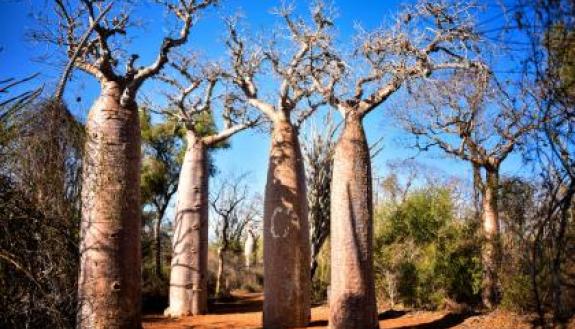
The baobab is the national tree of Madagascar. Photo by Rod Waddington.

July 18, 2016

Lemur DNA Tells of Madagascar’s Forested Past

Read

July 12, 2016

Disentangling the Plant Microbiome

Read

The iconic red fly agaric mushroom is one of more than 90,000 species of fungi that have been described. Researchers report that fungi may owe their abilities to grow, spread, and even cause disease to an opportunistic virus they caught more than a billi

May 9, 2016

Hijacked Cell Division Helped Fuel Rise of Fungi

Read

April 30, 2016

Honoring Teaching, Leadership in Trinity College

Read

  • Load More
Home

Socials

  • Facebook
  • Instagram
  • X
  • YouTube

Footer

  • Campus Communications
  • Contact Us
  • Accessibility
  • For the Media

Duke Today is produced jointly by University Communications and Marketing and the Office of Communication Services (OCS). Articles are produced by staff and faculty across the university and health system to comprise a one-stop-shop for news from around Duke. Melissa Kaye of University Communications and Marketing is the editor of the 'News' edition. Leanora Minai of OCS is the editor of the 'Working@Duke' edition. We welcome your comments and suggestions!

© Copyright 2026 Duke University. All rights reserved.