Home
    • Sections
      • Arts & Humanities
      • Business & Economics
      • Campus & Community
      • Environment & Sustainability
      • Global
      • Health & Medicine
      • Science & Technology
      • Working@Duke
    • More News & Info
      • Athletics
      • Books
      • COVID Response
      • Media & Opinion
      • Research & Innovation
      • Series
  • Trending
  • Watch
Home

Main navigation

    • Sections
      • Arts & Humanities
      • Business & Economics
      • Campus & Community
      • Environment & Sustainability
      • Global
      • Health & Medicine
      • Science & Technology
      • Working@Duke
    • More News & Info
      • Athletics
      • Books
      • COVID Response
      • Media & Opinion
      • Research & Innovation
      • Series
  • Trending
  • Watch

Socials

  • Facebook
  • Instagram
  • X
  • YouTube

Footer

  • Campus Communications
  • Contact Us
  • Accessibility
  • For the Media

Biology

from Scientific American

April 29, 2016

Sounds Like a Winner

Read on Scientific American

April 20, 2016

For baboons, a tough childhood can lead to a short life

Read on Smithsonian

A four-month old infant baboon rides on its mother's back near Amboseli National Park in Kenya. Early adversity, such as losing a mother before age four, reduces adult life expectancy in wild baboons by up to ten years, researchers find. Photo courtesy o

April 19, 2016

Rough Childhoods Have Ripple Effects for Baboons

Read

March 16, 2016

New Collaborative Seed Grant Program Gives Eight Awards

Read

March 7, 2016

Renowned, Resourceful Lakes Researcher Daniel Livingstone, Dead at 88

Read

The black widow spider’s telltale red hourglass-shaped mark appears brighter and more contrasting to birds than to insects, finds a new study. The red-and-black color combination sends a “beware!” signal to predators without scaring off their prey.

February 29, 2016

Black Widows: Obvious to Predators, Stealthy to Prey

Read

February 22, 2016

12 Duke Graduates Named Fulbright Scholars

Read

February 22, 2016

Two Junior Faculty Named 2016 Sloan Fellows

Read

February 15, 2016

Duke Senior Named Gates-Cambridge Scholar

Read

February 3, 2016

Same Switches Program Taste and Smell in Fruit Flies

Read

January 27, 2016

New Way to Detect Human-Animal Diseases Tested in Lemurs

Read

January 7, 2016

Surviving As An Underrepresented Minority Scientist

Read

December 7, 2015

Is Mantis Shrimp Research a Waste of Money? How 'Wastebook' Misses the Big Picture

Read on Duke Research Blog

December 1, 2015

Camouflaged Cuttlefish Employ Electrical Stealth

Read

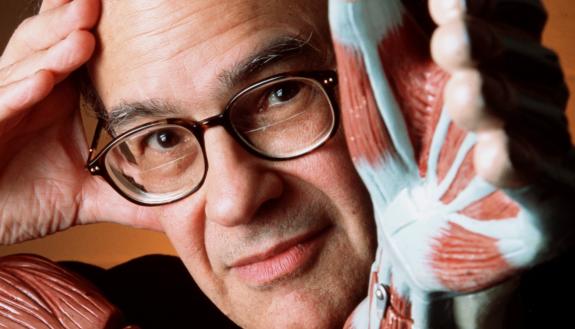
Duke biologist Steven Vogel in 2002. Vogel was the author of ten books, on topics ranging from the workings of the circulatory system and the design of leaves to the biomechanics of muscle. Photo by Les Todd, Duke Photography.

November 30, 2015

Duke Flags Lowered: Biomechanics Pioneer Steven Vogel Dies

Read

November 6, 2015

Duke creates program for first-generation students

Read on Inside Higher Ed

  • Load More
Home

Socials

  • Facebook
  • Instagram
  • X
  • YouTube

Footer

  • Campus Communications
  • Contact Us
  • Accessibility
  • For the Media

Duke Today is produced jointly by University Communications and Marketing and the Office of Communication Services (OCS). Articles are produced by staff and faculty across the university and health system to comprise a one-stop-shop for news from around Duke. Melissa Kaye of University Communications and Marketing is the editor of the 'News' edition. Leanora Minai of OCS is the editor of the 'Working@Duke' edition. We welcome your comments and suggestions!

© Copyright 2026 Duke University. All rights reserved.