Home
    • Sections
      • Arts & Humanities
      • Business & Economics
      • Campus & Community
      • Environment & Sustainability
      • Global
      • Health & Medicine
      • Science & Technology
      • Working@Duke
    • More News & Info
      • Athletics
      • Books
      • COVID Response
      • Media & Opinion
      • Research & Innovation
      • Series
  • Trending
  • Watch
Home

Main navigation

    • Sections
      • Arts & Humanities
      • Business & Economics
      • Campus & Community
      • Environment & Sustainability
      • Global
      • Health & Medicine
      • Science & Technology
      • Working@Duke
    • More News & Info
      • Athletics
      • Books
      • COVID Response
      • Media & Opinion
      • Research & Innovation
      • Series
  • Trending
  • Watch

Socials

  • Facebook
  • Instagram
  • X
  • YouTube

Footer

  • Campus Communications
  • Contact Us
  • Accessibility
  • For the Media

Natural Sciences

November 24, 2014

Boy Moms More Social in Chimpanzees

Read

November 19, 2014

How to Avoid Regret, Debt and Heft This Holiday

Read

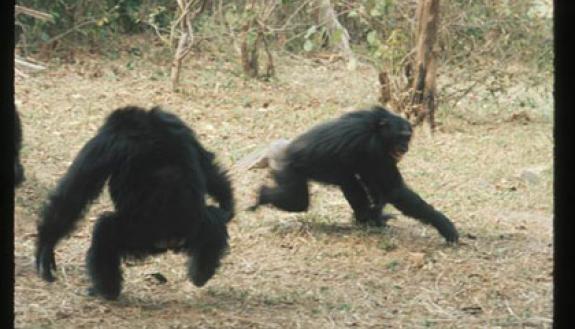
A male chimpanzee (left, with back to camera) menaces a fleeing female in a typical display of aggression. A new study finds that males who are consistently aggressive tend to sire more babies. (Credit: Jane Goodall Institute/ Jane Goodall)

November 13, 2014

In Chimpanzees, Long-Term Bullying Makes More Babies

Read

October 7, 2014

'Artstigators' Go Crazy for the Arts

Read

September 17, 2014

Two Duke Alumni Receive Prestigious MacArthur Fellowships

Read

September 16, 2014

Duke in Silicon Valley

Read on

September 14, 2014

Longing for Nepal

Read

September 10, 2014

Willard to Lead New Research Program for Undergrads

Read

Baboons make friends and cement social bonds is by grooming -- an activity that involves picking dirt and parasites and dead skin out of each other’s fur. This adult male is grooming an adult female near Amboseli National Park in Kenya. Photo by Noah S

September 10, 2014

Lady Baboons With Guy Pals Live Longer

Read

September 5, 2014

Cassidy Pomeroy-Carter: Studying Creatures Great and Small

Read

September 4, 2014

Passion and purpose: Duke senior creates software for homeless shelters

Read on ExitEvent

September 2, 2014

Richard Kay to receive Argentinian science prize

Read

Bites from mosquitoes like this one are responsible for transmitting malaria, a disease that claims hundreds of thousands of lives each year. Duke researcher Emily Derbyshire has identified a number of compounds -- some of which are in clinical trials to

August 25, 2014

Cancer-Fighting Drugs Might Also Stop Malaria Early

Read

August 25, 2014

Scientists Uncover Navigation System Used by Cancer, Nerve Cells

Read

August 22, 2014

Brian Hare, Vanessa Woods: Experiments with humans can save wildlife

Read on LiveScience

August 20, 2014

Chimpanzee Voices From the Past Go Digital, Open Access

Read on Duke Research Blog

  • Load More
Home

Socials

  • Facebook
  • Instagram
  • X
  • YouTube

Footer

  • Campus Communications
  • Contact Us
  • Accessibility
  • For the Media

Duke Today is produced jointly by University Communications and Marketing and the Office of Communication Services (OCS). Articles are produced by staff and faculty across the university and health system to comprise a one-stop-shop for news from around Duke. Melissa Kaye of University Communications and Marketing is the editor of the 'News' edition. Leanora Minai of OCS is the editor of the 'Working@Duke' edition. We welcome your comments and suggestions!

© Copyright 2026 Duke University. All rights reserved.