
350 Champions, 700 Lifts and a Safer Way to Move Patients at Duke
A growing network of trained caregivers is transforming how patient movement happens across units and clinics

“It’s awesome for people to be able to come by and get comfortable with these machines and then go back and help their teams be more comfortable using them, too,” said event participant Jon Hall, a Polysomnographic Technologist at the Duke Sleep Disorders Clinic.
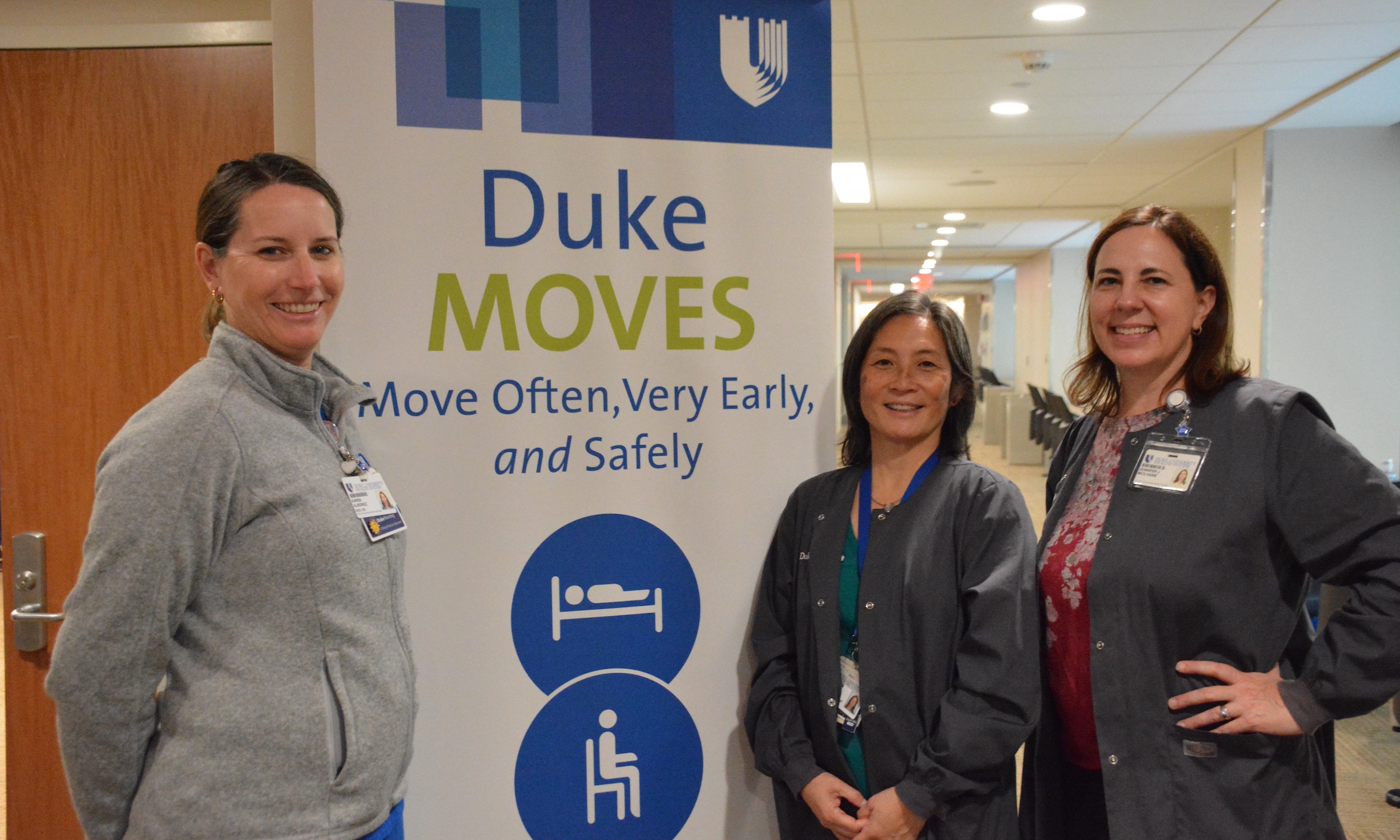
For the past decade, Duke MOVES – Move Often, Very Early and Safely – has equipped caregivers from across Duke University Health System with the skills and confidence to move patients safely, offering training in safe handling techniques and the use of mechanical lifts. The program has been led since its inception by OESO Duke MOVES Program Coordinators Yeu-Li Yeung and Jennifer McIlvaine.
Alongside drop-in sessions and unit safety audits, the program centers on a supported network of healthcare professionals – dubbed “Duke MOVES Champions” – who serve as in-house experts for safe patient mobility.
In its first 10 years, Duke MOVES has trained more than 350 champions from across 73 inpatient units and 98 clinics and procedural areas, supporting a health system that now uses nearly 700 lifts.
“It’s a unique program, I don’t think a lot of organizations have something like this that combines safe patient handling and falls prevention,” said Duke Health Assistant Vice President for Practice, Quality, Education and Magnet Margarita de la Fuente, Duke MOVES’ executive sponsor. “Duke really prioritizes the safety of our patients and the safety of our people.”
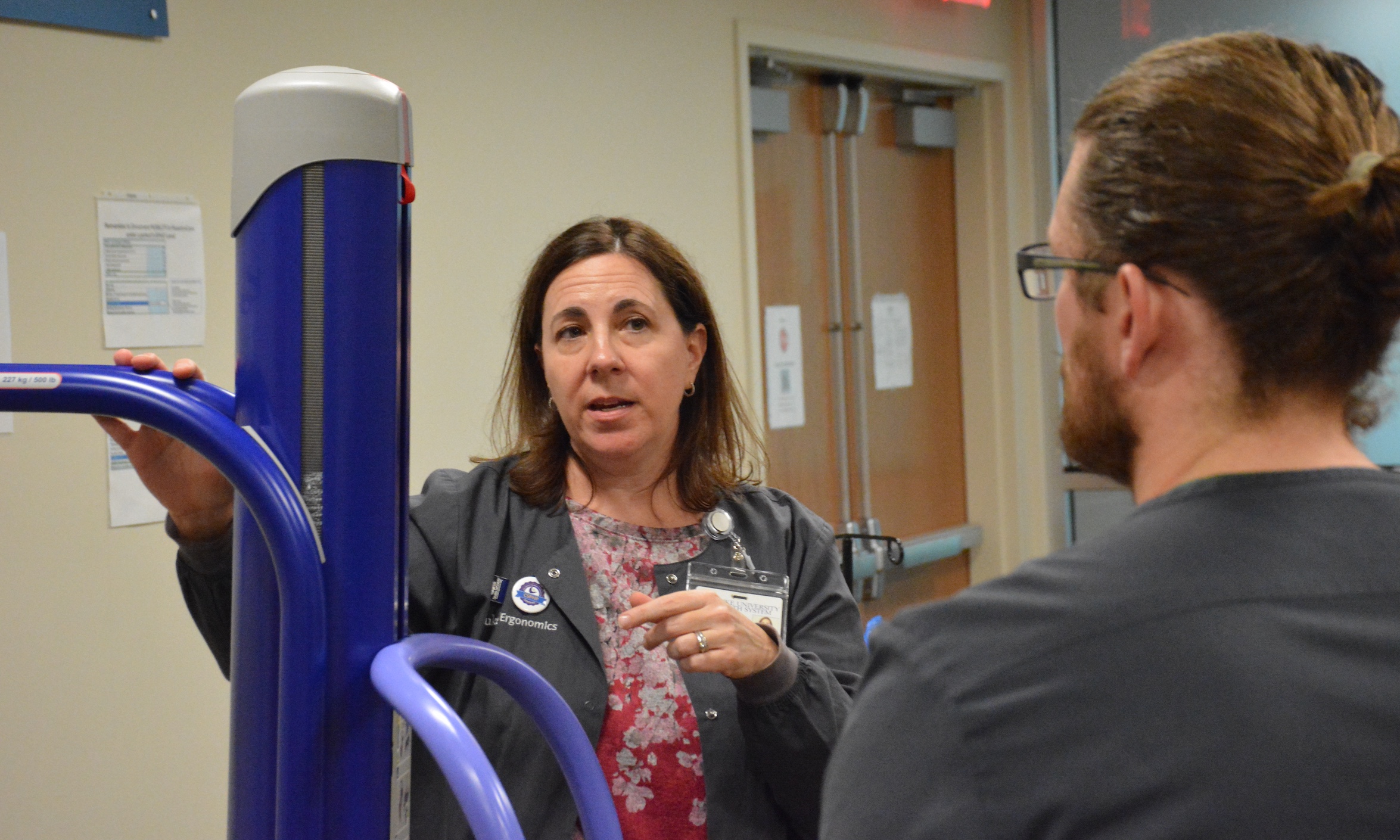
The program’s roots date back nearly 25 years, when the first patient lifts arrived at Duke University Hospital. While the devices reduced injury risks for patients and staff, caregivers unfamiliar with them were often hesitant to use the lifts due to patient comfort or slowing workflow.
In 2004, the Duke Department of Nursing and the Ergonomics Division of OESO launched the Minimal Manual Lift Environment (MMLE) program, which trained Duke caregivers on safe patient handling practices and encouraged lift use.
The effort worked. As lifts became more common, Duke leaders saw a chance by 2014 to expand the MMLE’s scope to include broader fall-prevention strategies and ways to help patients begin moving earlier in recovery.
The expanded program, launched in 2015, now known as Duke MOVES, showed early positive trends. In its first year, employee injuries that required time away from duties dropped by 45%. That figure continued to drop for the next three years.
“I think we have the best jobs at Duke,” said McIlvaine, who oversees Duke MOVES initiatives at Duke Regional and Duke Raleigh hospitals. “We get to care for the caregivers. These folks are out there on the line every day, giving their all, and we get to help keep them safe.”
Send story ideas, shout-outs and photographs through our story idea form or write working@duke.edu.
Follow Working@Duke on X (Twitter), Facebook and Instagram and subscribe on YouTube.