
Books for When There’s a Chill in the Air

This book from Nellie Chu, assistant professor of anthropology at Duke Kunshan University, tells the story of the migrant entrepreneurs at the heart of Guangzhou’s fast- fashion industry, one of the world’s most dynamic hubs of transnational commodity production.
Martin Eiermann, “The Limiting Principle: How Privacy Became a Public Issue” (Columbia University Press, July 2025)
Written when he was a sociology postdoctoral student at Duke, Martin Eiermann’s book examines how privacy evolved from a set of informal social norms about domesticity into a highly politicized and consequential issue that now shapes debates about the relationship between citizens and state and between consumers and corporations.
Donald Horowitz, “The Promise and Perils of Devolution: Federalism, Regional Autonomy, and Ethnic Conflict” (Oxford University Press, November 2025)
The book by Donald Horowitz, professor emeritus at Duke Law School, deals with devolving power from central governments downward to states or regions, pinpointing the serious hazards of discrimination and violence in doing so in ethnically heterogeneous regions.
Krista T. Kenney, “Reignited: A Practical Guide to Overcoming Burnout and Thriving at Work and Home” (self-published, 2024)
In an era of relentless demands and burnout, Krista Kenney, an associate director in the Office of Audit, Risk and Compliance at Sanford School of Public Policy, offers practical strategies to restore balance, enhance productivity, and reignite passion in both work and life.
Kimberly Lamm, “Riddles of the Sphinx” (Bloomsbury, June 2025)
Kimberly Lamm explores “Riddles of the Sphinx” (1977), a classic of feminist avant-garde cinema. The film follows the life of a white middle-class woman living in London in the 1970s as she confronts the complex politics of motherhood, domestic labor and work. Lamm shows how the film uses voice, sound and writing to challenge Hollywood’s dominant images of women and to portray maternal care as a legitimate form of work. Lamm is an associate professor of gender, sexuality & feminist studies.
Rachel Myrick, “Polarization and International Politics: How Extreme Partisanship Threatens Global Stability” (Princeton University Press, September 2025)
Polarization is a defining feature of politics in the United States and many other democracies. Yet little is known about how polarization influences international cooperation and conflict. Myrick, an associate political science professor, argues that polarization reshapes the nature of constraints on democratic leaders, which in turn erodes the advantages democracies have in foreign affairs.
Kristen B. Neuschel and Ann Marie Rasmussen, “Writing with Research: A Practical Guide” (Routledge, 2025)
This resource is aimed at writers seeking wider audiences, including academics (humanists, social scientists, scientists), students and professionals; in short, it’s for anyone out there who is pursuing a writing project using research, from the academic to memoir, to historical fiction. Kristen Neuschel is professor of history emerita, and Ann Marie Rasmussen is a professor emerita of German.
Dr. Mark Anthony Powers, “A Swarm in May” (Hawksbill Press)
The debut novel of a doctor and beekeeper weaves systemic racism, Little League baseball and the art and science of beekeeping into a riveting medical mystery. Dr. Mark Anthony Powers is an associate professor of medicine at Duke.
Alex Rosenberg, “Blunt Instrument: Why Economic Theory Can’t Get Any Better… Why We Need It Anyway” (MIT Press, 2025)
A critique of economic theory is that it always works better after the fact than in making accurate predictions. Alex Rosenberg, a philosophy professor, believes that economic theory is a necessity because it helps civilized society protect itself from the rapaciousness that condemns all markets to fail.
Alex Rosenberg, “Thurlow’s War” (Doubledagger Press, April 2025)
Rosenberg also has written this historical novel set in the days before Pearl Harbor: American pilot Will Thurlow fights, first for Republican Spain then with the Chinese against Japan. These assignments expose Thurlow to repeated dangers, not just from enemy action but from someone on his own side, trying to get him killed.
Jana Schaich Borg, Walter Sinnott-Armstrong “Moral AI and How We Get There (Pelican, February 2024)
The artificial intelligence revolution has begun. Today, there are self-driving cars on our streets, autonomous weapons in our armies, and robot surgeons in our hospitals. A.I.'s presence in our lives will only increase. Social Science Research Institute professor Jana Schaich Borg and philosophy professor Walter Sinnott-Armstrong of Duke with Vincent Conitzer tackle these thorny issues head-on.
Anna M. Moncada Storti, “Torn” (Duke University Press, March 2026)
This treatise on Asian/white life by Anna Moncada Storti, an assistant professor of gender, sexuality & feminist studies, uncovers the tensions that stem from the unrelenting violence of U.S. imperialism — tensions that mixed race people must actively defuse and alter or risk reifying.
Daniela Trujillo-Hassan, “El solar de los curubos: una arqueología de las plantas en la Bogotá republicana” (Instituto Colombiano de Antropología e Historia)
The book explores the role of plants in everyday life and memory through historical archaeology and illustration. It’s based on excavations and archival research in 19th-century Bogotá and was written for academic and general audiences. Daniela Trujillo-Hassan, a Ph.D. student in evolutionary anthropology in the Pontzer Lab, co-authored the book.
Co-Edited by Ross Wagner, “Being Christian After the Desolation in Gaza” (WIPF, August 2025)
Ross Wagner, an associate professor of the New Testament, co-edited these essays containing tories and cries from Christians — American, Latin American, Jewish, Palestinian — who have spent years listening, laboring, and praying for a durable, equitable peace between Palestinians and their Jewish neighbors.
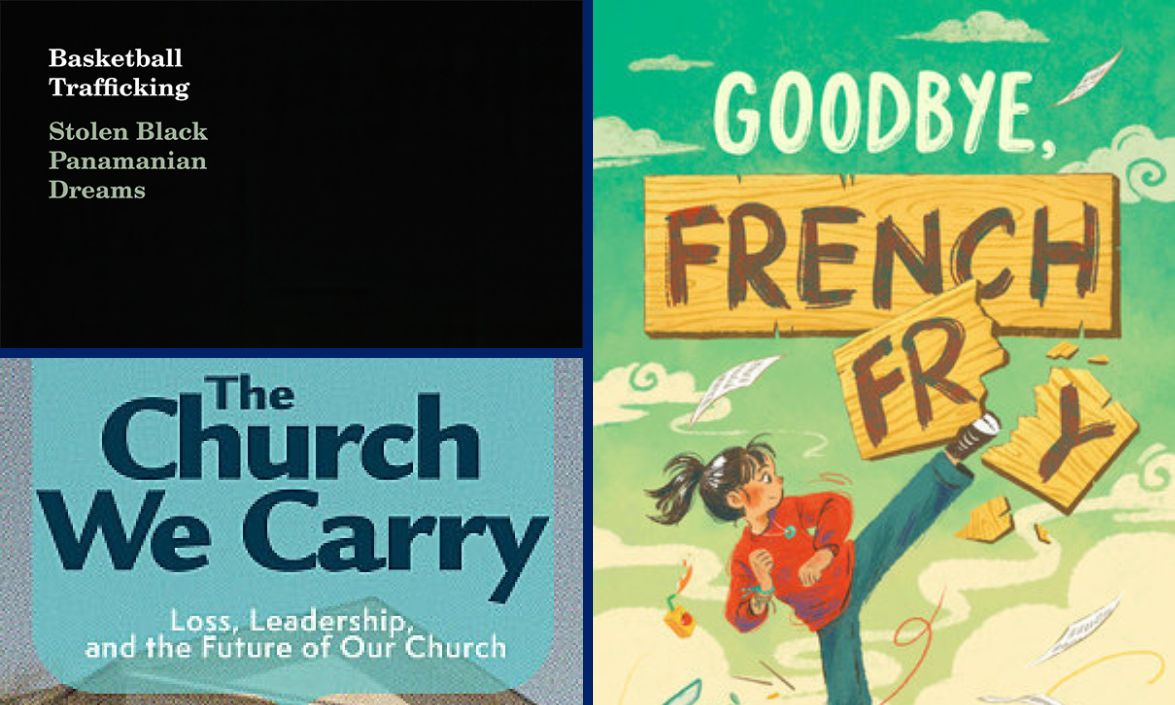
Javier Wallace, “Basketball Trafficking: Stolen Black Panamanian Dreams” (Duke University Press, November 2025)
Javier Wallace, a postdoctoral associate in African and African American Studies, examines the story of how a young Black Panamanian teenager navigates basketball trafficking, labor exploitation, and immigration while trying to make it from high school to college basketball in the United States.
Kathi Weeks, “Abolition Archives, Feminist Futures” (Duke University Press, March 2026)
Kathi Weeks, an associate professor of women's studies, takes up the work of three iconic feminist thinkers — Angela Davis, Shulamith Firestone, and Donna Haraway — to ask how each author’s vision of work, the family, and the carceral state can expand contemporary feminism’s ability to structurally analyze social problems.
William Willimon, “The Church We Carry: Loss, Leadership and the Future of Our Church” (Abington Press, 2025)
The Duke Divinity professor explores how failures in leadership and theological vision contributed to our current denominational crisis. Through the lens of a South Carolina historic congregation, William Willimon offers a critical analysis that will enlighten today’s congregational leaders on navigating the complexities of ministry in our uncertain future.
Joseph R. Winters, “The Disturbing Profane: Hip Hop, Blackness, and the Sacred” (Duke University Press, August 2025)
Associate Professor of Religious Studies Joseph Winters brings religious studies, Black studies, Black feminist thought, and critical theory to bear on hip hop to examine distinctions between the sacred and the profane. He shows how artists like Notorious B.I.G., Lauryn Hill, Kendrick Lamar, Lupe Fiasco and Nicki Minaj undermine stable meanings of the sacred to reveal listeners’ investments in unpleasant realities.
Rin-rin Yu, “Goodbye, French Fry” (Penguin Random House, February 2026)
Rin-rin Yu, an assistant vice president in Duke’s Communications and Marketing office, has written a warm and funny middle-grade novel about Ping-Ping, a Chinese American girl who is doing her best to stay true to herself. She was born in the U.S., so it’s frustrating when people are surprised by how American she is, but her Chinese relatives feel she’s not Chinese enough. Watch as Ping-Ping is ready to kick all assumptions aside!