
Q&A With Duke Neurosurgeon David Hasan
His vision for a village that could house, feed, teach and care for Gaza’s orphans is starting to bear fruit

Dr. David Hasan will discuss his humanitarian work in Gaza on October 6 at 6 PM in Rubenstein Library 153. The event is open to the public.
Where did the idea for the Academy of Hope first come from?

When I went the first time to Gaza, I didn't know exactly what to expect or what to anticipate, because we were the first group of surgeons to enter since the war broke out. We operated intensively for almost eight days and then we left. And after that, it became a passion to go back and help as much as we can. I was very lucky because (the health technology company) Medtronic was able to donate approximately a million dollars of equipment. Other organizations were able to donate baby formula and medicine. I got all that with me in Cairo, and we took about 18 trucks and entered to Gaza.
But even going inside, I was not making a huge difference because I'm limited by the availability of medicine, equipment, ICU beds, surgical teams, anesthesia. And for the time I spent, I thought something needed to be done differently.
When I was there the first time, I noticed it, but the second time, I noticed it more because casualties by then had accumulated: kids who are orphaned, either one parent or both, or unaccompanied kids who were lost during the transition and the bombing and the chaos that’s going on.
So when I left in April, it became a clear, defined goal. I knew my new passion and trajectory was to stay outside and do as much as I can to take care of this. No one was thinking about it. Everybody was focusing on the trauma, focusing on medicine, but not on the orphans and how to create a haven for them.
How did you get started on such an ambitious project?
I worked with other NGOs, but the other NGOs were distracted with other things. It didn't materialize till I was interviewed by Israeli newspaper Haaretz. I was able to articulate my idea of building an all-encompassing village for 20,000 orphans — a shelter, a field hospital (the only field hospital in Gaza for children), a school that also has psychotherapy. There was an overwhelming response from the people in Israel, to the point that they would allow me to meet and discuss that with Coordinator of Government Activities in the Territories (COGAT), which is the Israeli body that controls everything that enters Gaza.
“What bring us all together, even with different religions — Druze, Jews, Arabs, Catholics — is the love for humanity and the common theme of making this place better.”
Dr. David Hasan
I started interviewing different people, the U.S. State Department, USAID, several governments. Everybody thought it was a great idea, but they all ruled it out as impossible to achieve, especially in a dynamic war zone. But it never deterred us.
The first attempt for us was in January. COGAT and the Israeli Defense Forces (IDF) created a bubble zone for us in Northern Gaza, which is very close to the border. But then the ceasefire happened. Because of that the IDF pulled back and Hamas came in. It made the logistics much harder, so we decided to wait it out.
We then decided to do it on two different campuses, one in Northern Gaza and one in Southern Gaza, because people couldn’t move easily. But then the ceasefire fell apart, and the IDF took over the land. For our last attempt, we decided to stay in the middle in Deir al-Balah, which is in Central Gaza.
How did the community respond?
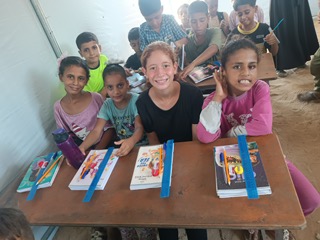
We came to the refugee camp at beginning of July and said, ‘Hey, we'd like to build an academy — a school that is also a food center.’ The community all got excited and really wanted this project to be successful. We identified land that was free, and very close to the refugee camp. It’s walking distance for the kids, and because about 10-15% of the kids are disabled, very accessible and protected. We built a team of teachers, and we built the academy. And immediately we registered about 500 orphans.
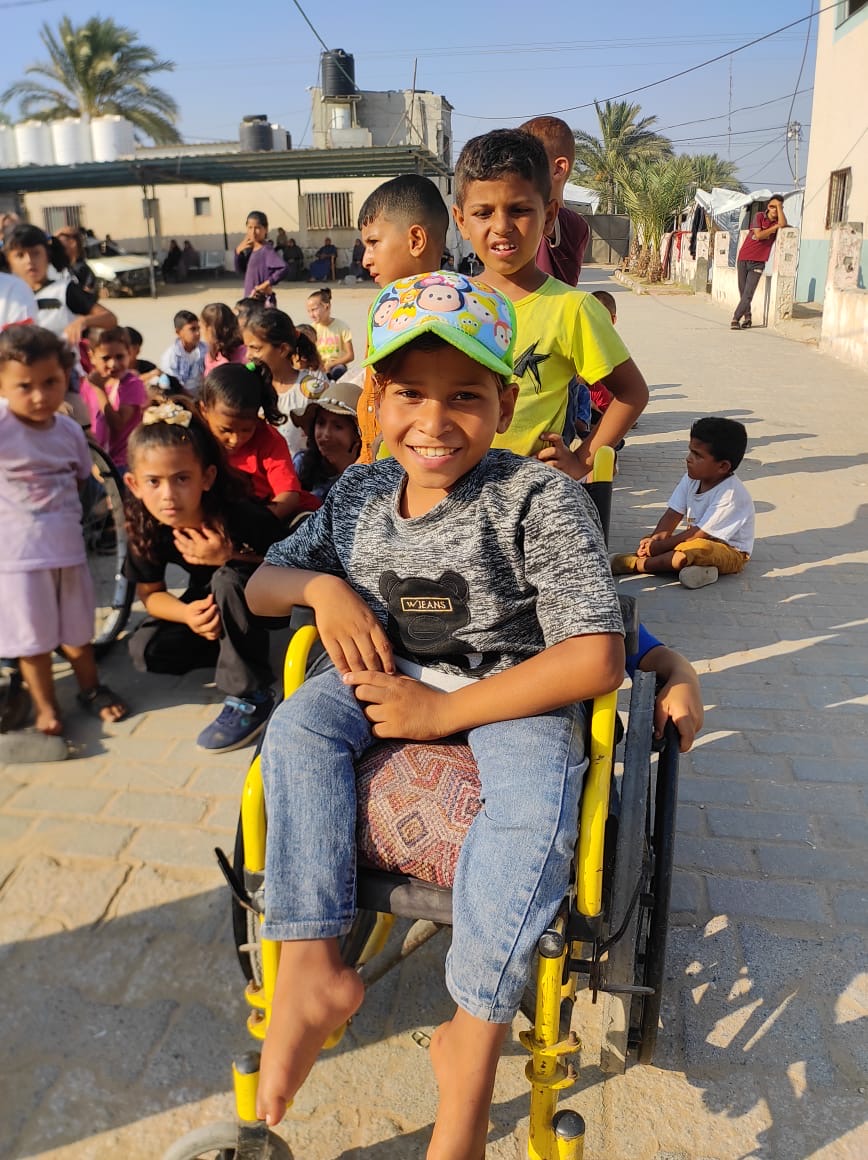
It was overwhelming to see the response, but what shook us immediately that some of the orphans didn't have meals for three, four days. So I immediately called José Andres. And literally the next day, he sent a truck with meals made, and the kids ate. And so immediately we offered a real haven, a shelter for 500 orphans who suddenly find our place is a comfort zone.
They come in at dawn just excited to be there and leave in the evening. They can see their friends, they can be kids again. And top of that, they’re fed.
Airstrikes recently hit the refugee camp in Deir al-Balah, and the humanitarian situation across Gaza has worsened. How is that affecting your efforts?
The day after the bombs hit, we thought ‘We’re done,’ because the kids dispersed. But they showed up the next morning. They’re resilient, and they made a commitment. They want the academy. They’re teaching us how to be brave and resilient, and we reciprocate. We’re committed 150% to be there for them to see it through.
Because of our success, the people in Deir al-Balah want us to expand to 5,000 orphans. The only thing limiting us is money. But we anticipate people will now start moving from Gaza City with the war moving there. So the current conditions, even though it may get worse, they’re making us more determined and more creative to do things.
We are creating a hope. This is all grassroots, amateur people. What bring us all together, even with different religions — Druze, Jews, Arabs, Catholics — is the love for humanity and the common theme of making this place better. Everyone has kids, including me, and is thinking about five years now, 10 years now. We don't want another cycle of violence.